E-Mail   Tony@lathes.co.uk 
Home    Machine Tool Archive    Machine Tools For Sale & Wanted
Machine Tool Manuals   Machine Tool Catalogues


Adcock & Shipley (Ryder & Son)
Universal Machine Tool
Adcock & Shipley Horizontal Millers     Vertical Millers   Universal Page 2

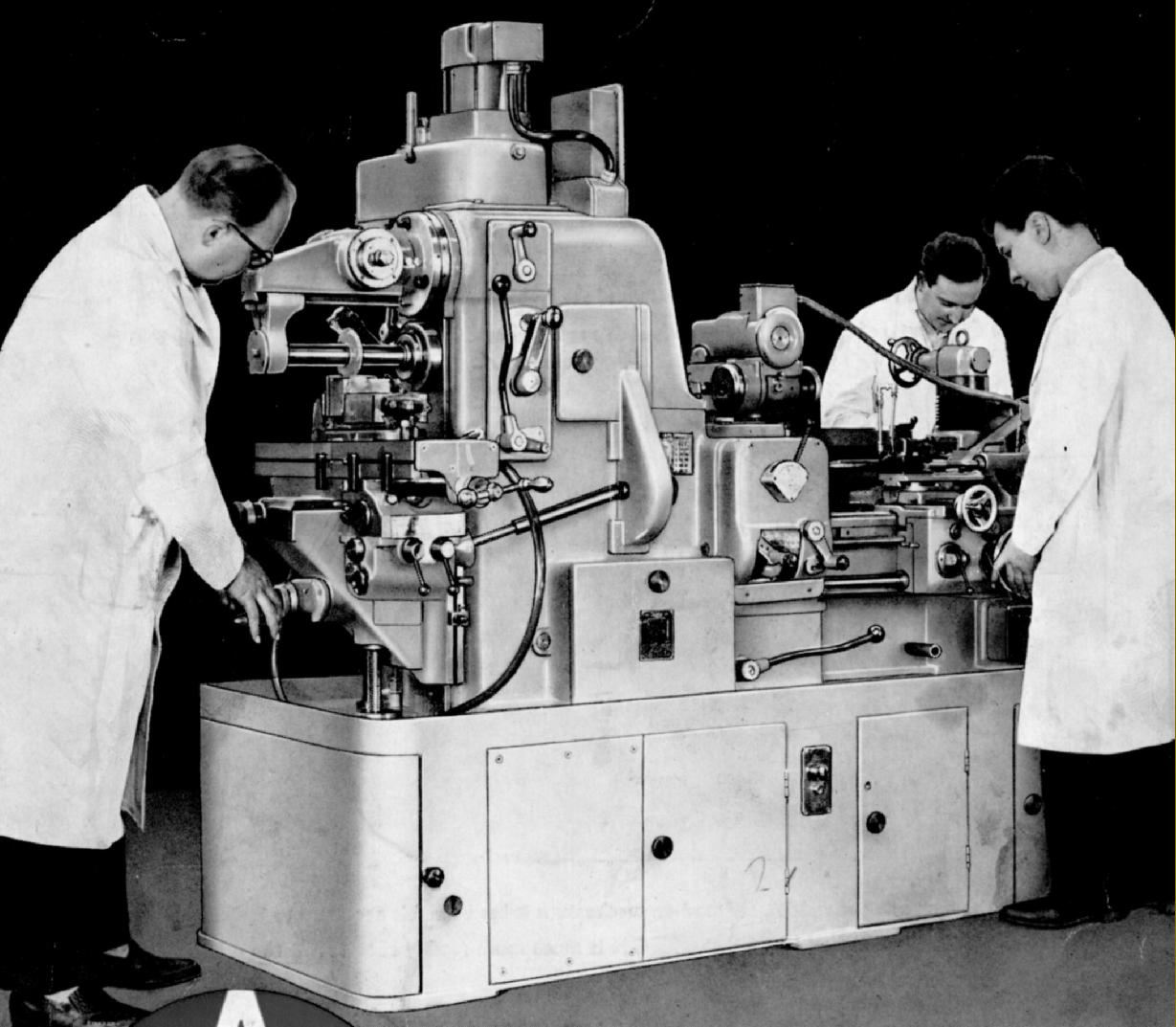
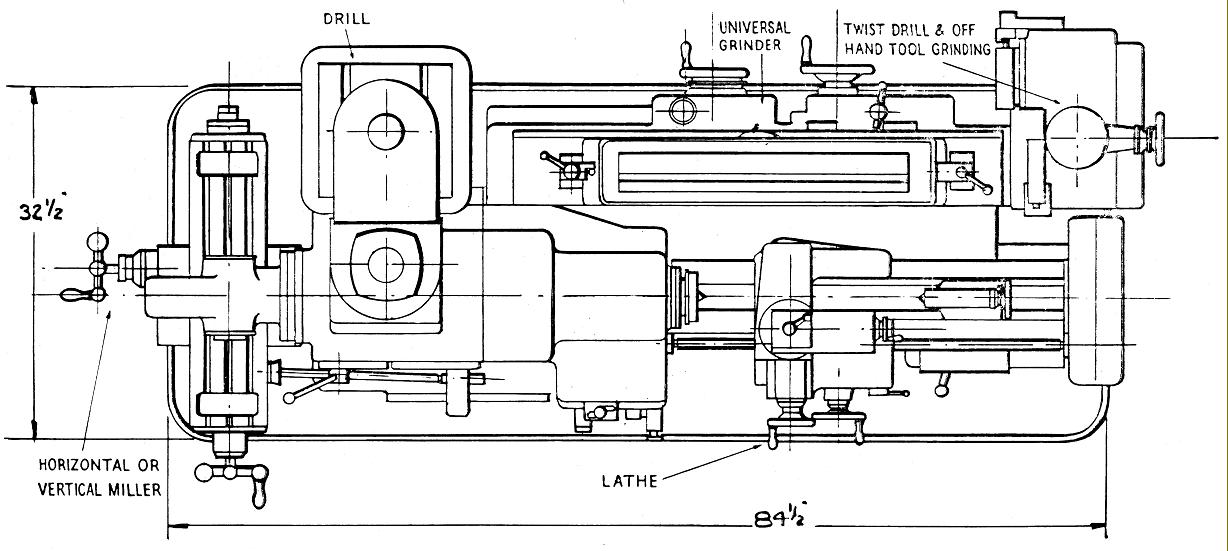
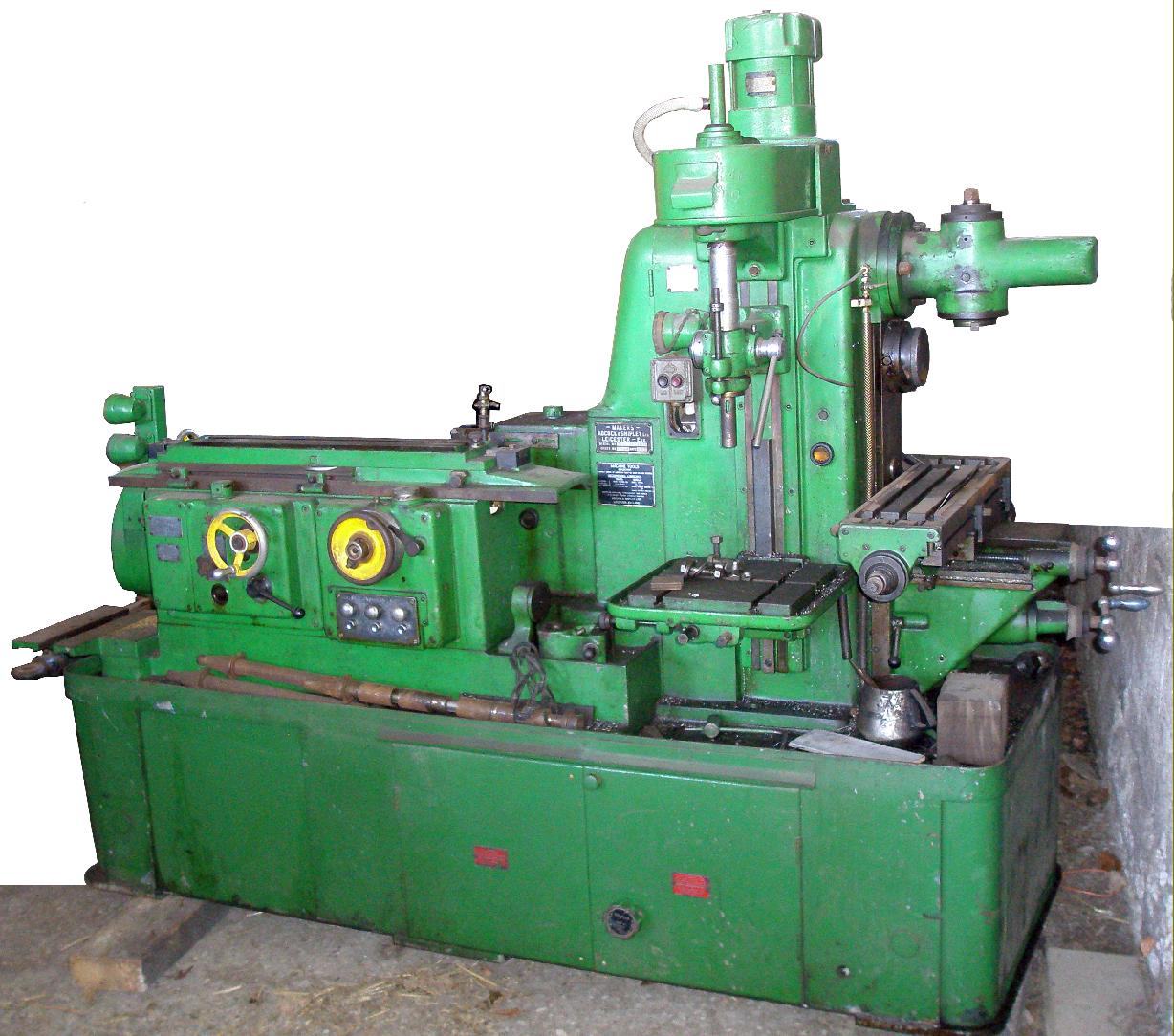
Adcock and Shipley produced, over many years from their Leicester factory, a vast range of engineering equipment including, during the 1950s and 1960s, the remarkable "Universal", a machine not unlike that produced in Japan as the Dainichi. It was built in two sizes, to a very high specification (the smaller occupying a footprint of only 7 ft. by 3 ft. and the larger 11' 6"b y 3' 8") with each including a screwcutting and power-feeds lathe, a cylindrical/universal  grinder, a vertical/horizontal miller and a drill. The unit was designed originally for shipboard use and met the various specifications laid down by the British Admiralty for that purpose. It was constructed to be as "shockproof" as possible and was very heavily built and beautifully finished - on a smaller boat this would certainly have been a most useful tool for assisting with general maintenance and repairs. It is rumoured that only twenty-four of the smaller type were made (figures for the larger are unknown but must have been similar) with some known to have gone into navel vessels, thought not submarines, which were too small for so large a machine. Instead of sliding (or elevating) beds and headstocks with multiple and adaptable uses, as on many other machines of the same type, the A & S was built around a conventional centre lathe with each separate machine tool being self powered and capable (apart from the grinder and lathe) of being run at the same time. However, some confusion surrounds the origins of the machine with the larger of the two types being of an even higher specification and very much more complex construction and marked Thomas Ryder & Sons. Based in Turner Bridge, Bolton, Lancashire, Ryder was a company better known for their specialist Verticalauto and  Rydermatic machines and it is entirely possible that the Universal was a combined effort.
Smaller model:
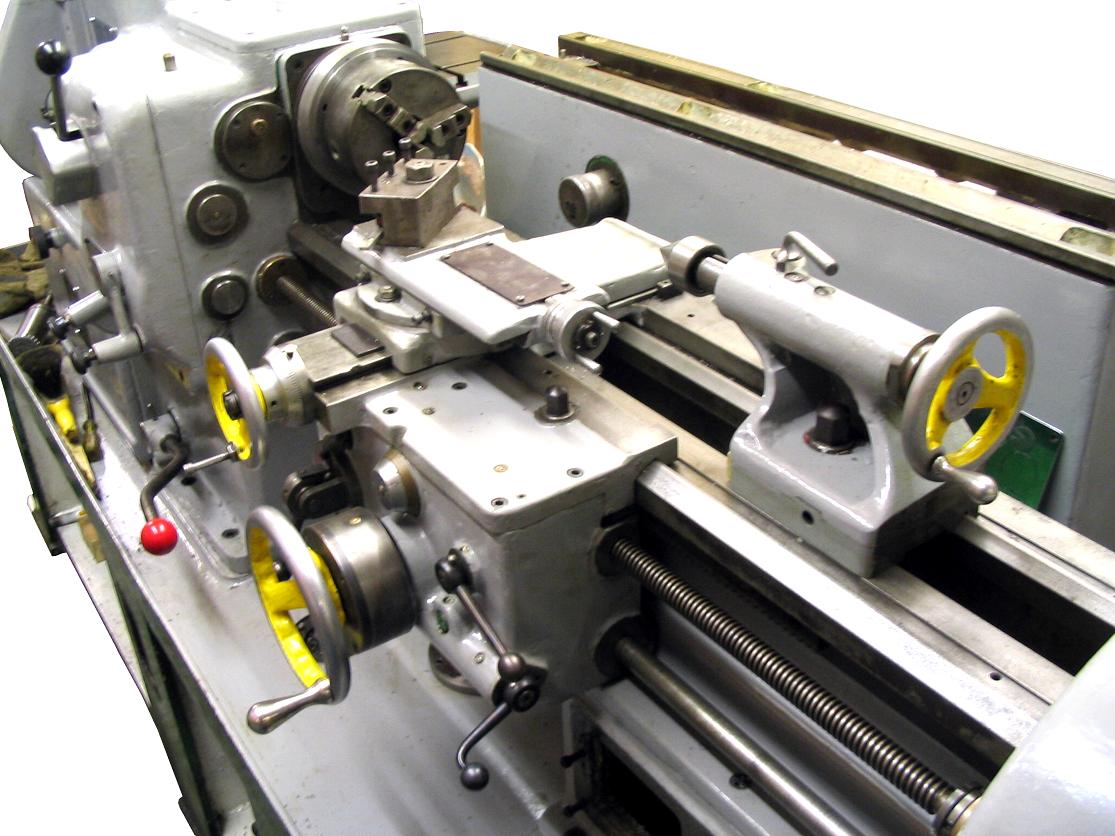
Of modest capacity, with just an 8" swing by 18" between-centres, the geared-head lathe element had eight spindle speeds of 58, 92, 137, 198, 300, 470, 707 and 1020 rpm. It was driven my a 3 HP 1760 rpm 3-phase motor and had a (rather modest) 0.75" hole through the headstock spindle. A simplified gearbox was fitted that offered a range of threads between 4 and 100 t.p.i. Metric threads were also available, but details of their inclusion into the gearbox, or of the necessary conversion set, are not known. A separate power shaft was used to provide sliding and surfacing feeds, so leaving the leadscrew exclusively for the generation of threads.
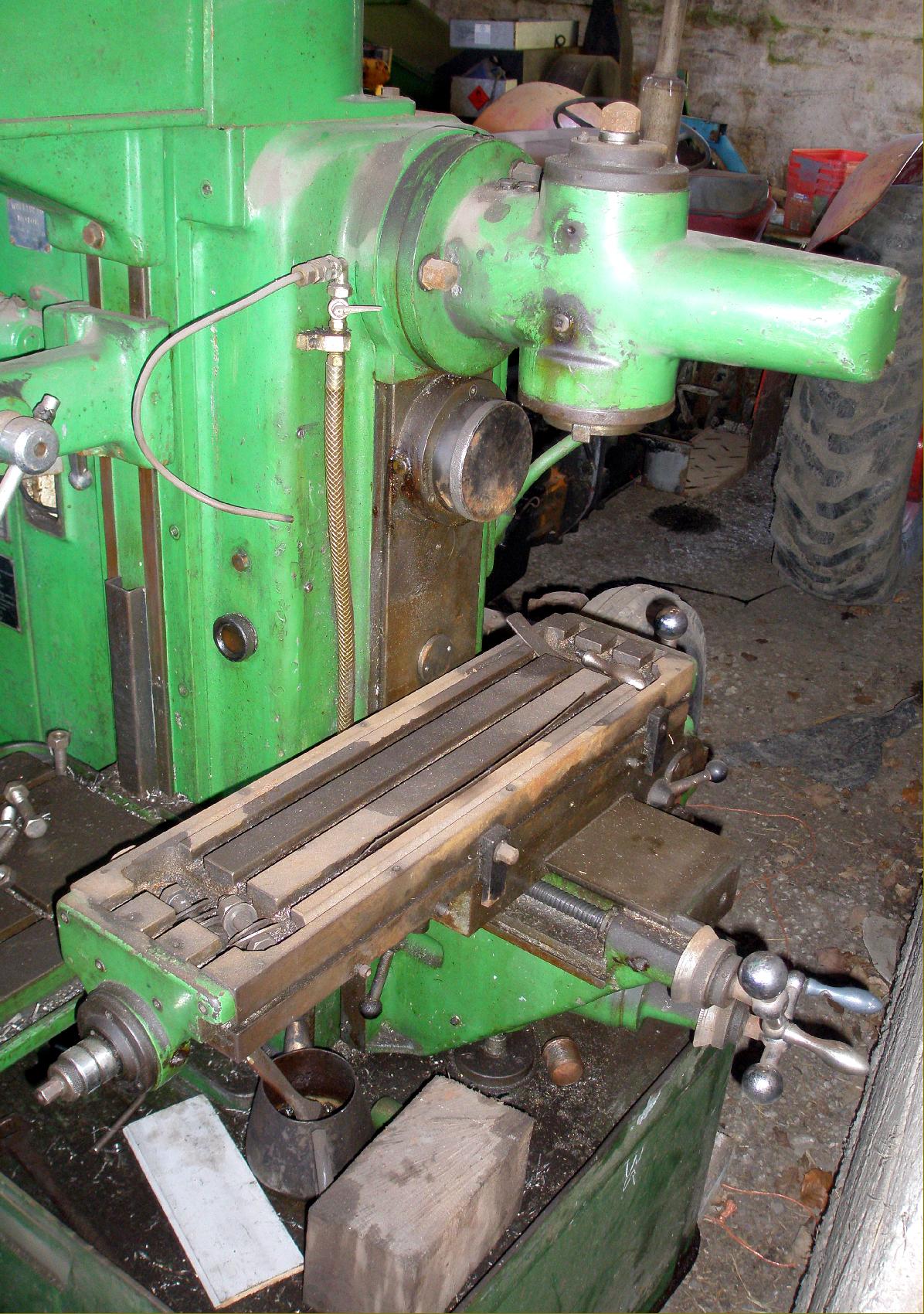
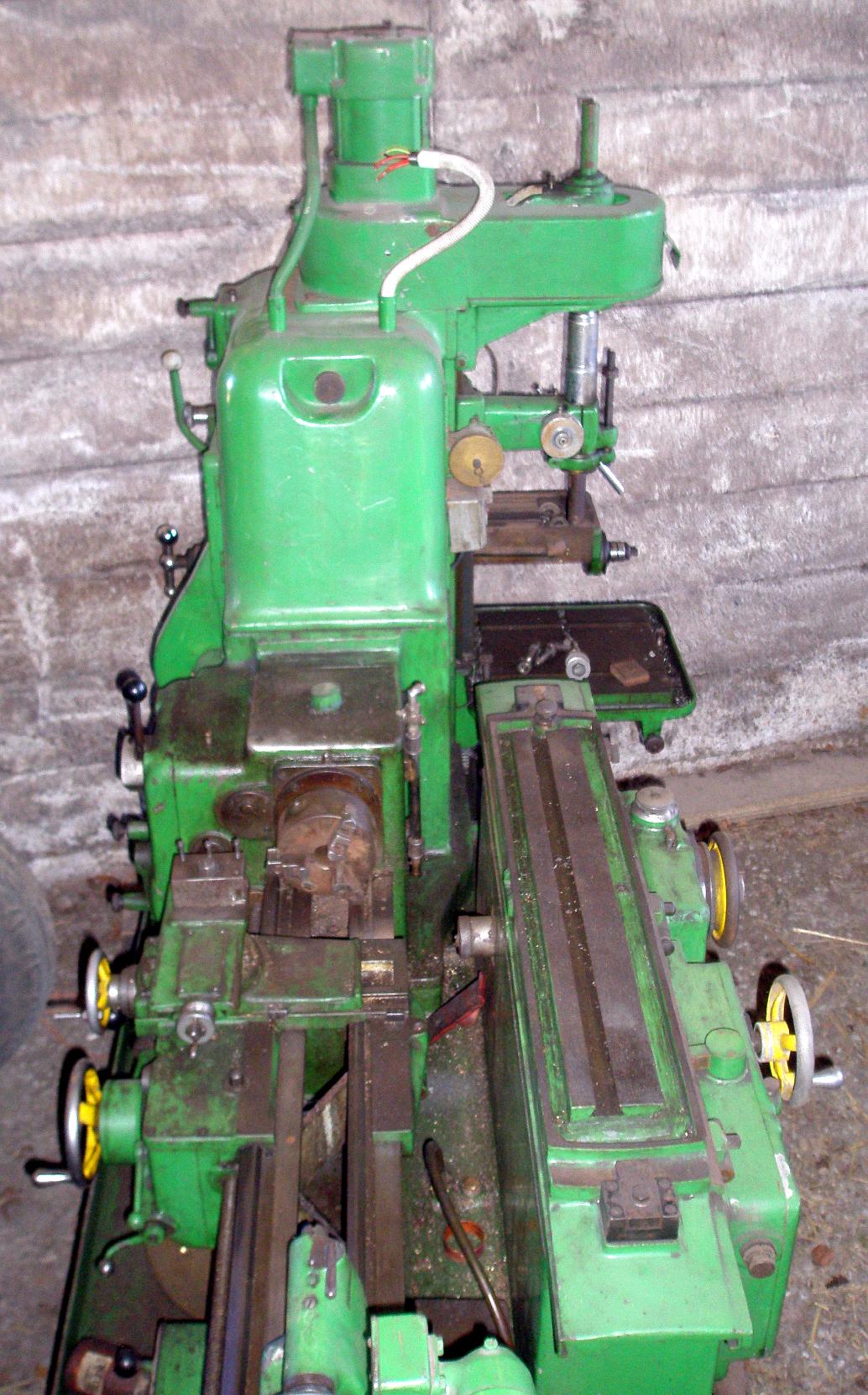
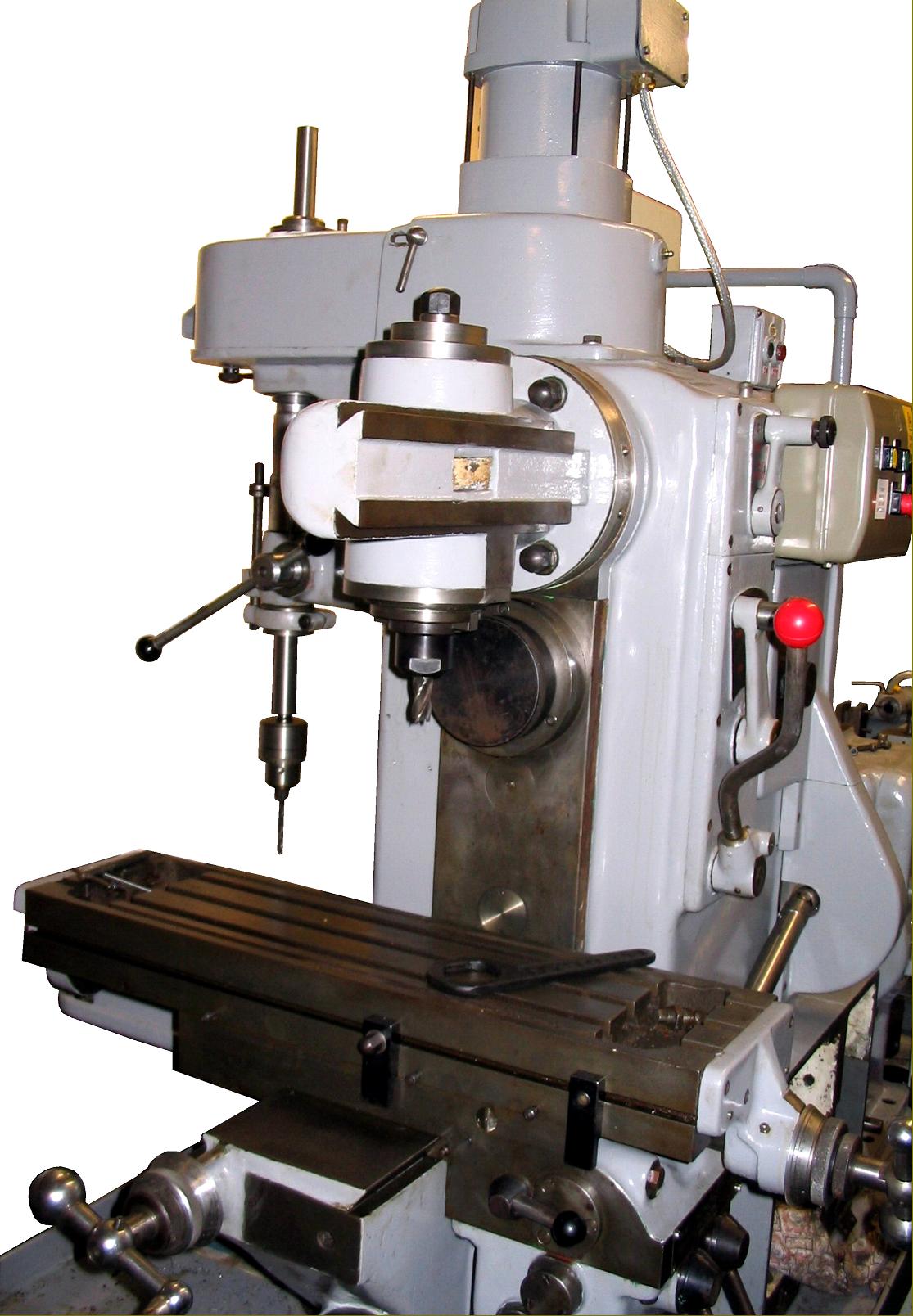
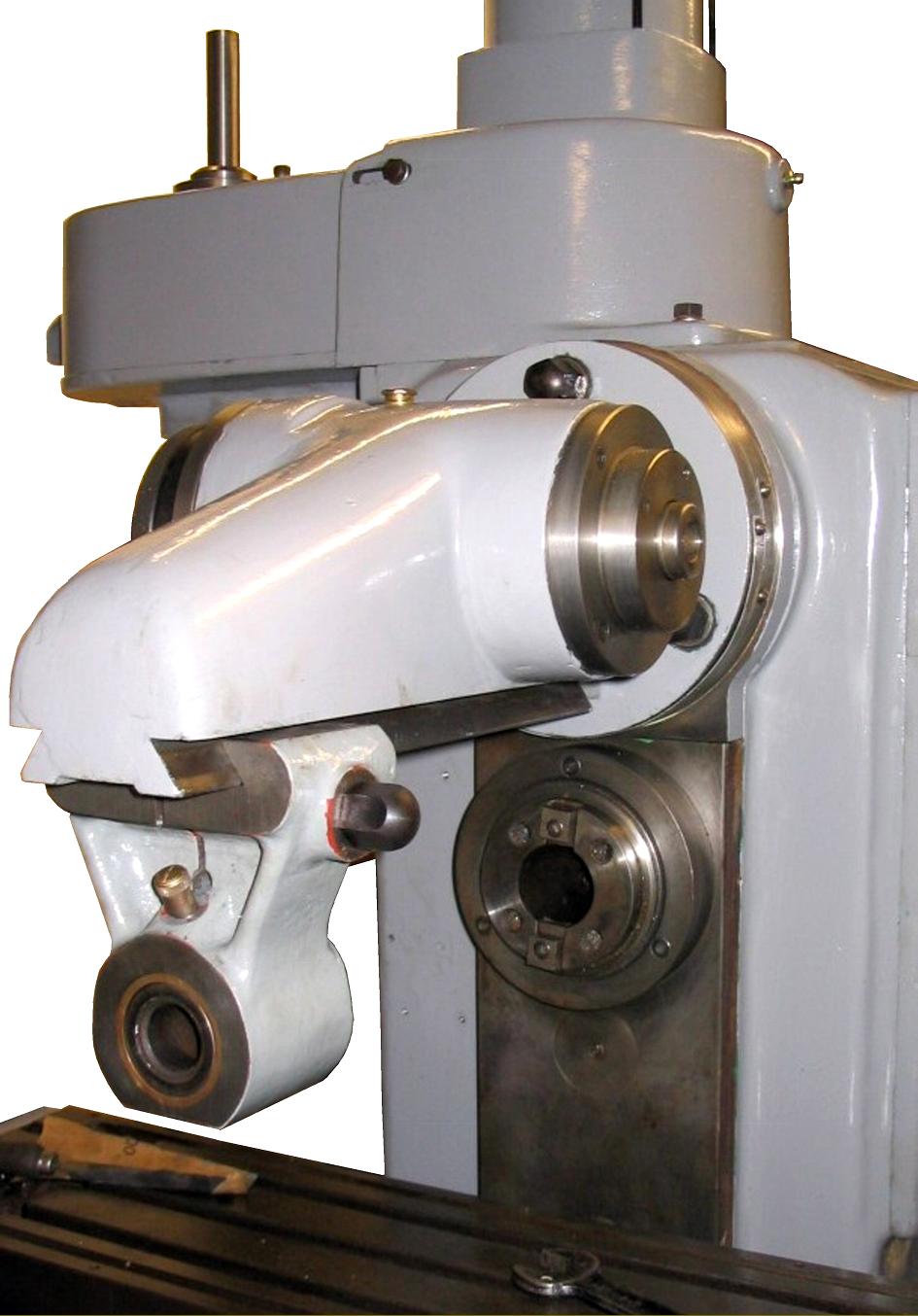
Of ingenious construction, but limited capacity, the milling machine had a vertical head built into the horizontal arbor support - it being a matter of simply swivelling it through 90° to bring it into operation). The working surface of the 6-speed power-driven table was 26" x 6" with a longitudinal travel of 10" and a cross travel of 5.5" - whilst the knee could be elevated through a range of 10". The No. 40 international spindle ran at 48 to 970 rpm in horizontal mode and from 77 to 1575 rpm when used vertically.
Mounted at the back of the lathe "headstock", the drill (with a maximum table capacity of 15" in diameter) had six speeds from 420 to 5000 r.p.m. with power supplied by a 0.5 hp motor. Unfortunately, the quill was only fitted with a No. 1 Morse taper, so severely restricting its capacity for heavy-duty work.
Able to be swung 45 degrees clockwise and 15 degrees anti-clockwise, the universal grinding machine table was mounted parallel to the lathe bed and used the latter as mount for  its wheel head. Two gears connected the head to controls at the front of the grinding machine. The maximum swing over the table was 7" and the largest job that could be accommodated was 6.5" in diameter and 10" long. For internal grinding - the maximum capacity was a hole 4-inches in diameter - the wheel head had to be swivelled through 180 degrees to bring to the attachment to the front. Tool and cutter grinding was also possible, with a variety of attachments available including a special Universal Cutter Head to mount on the table in place of the standard workhead. Surface grinding was accomplished by mounting a platform on the standard table and attaching a magnetic chuck to it; an extension was also fitted to the standard wheel head to bring the stone forward and so increase its coverage. The coolant supply to the grinding head was a separate unit, designed (of course) to avoid contaminating the other coolant (supplied to lathe, miller and drill) with abrasive particles.
Before you rush out to find one of these beautifully-made machines for your 12' x 12' wooden-floored workshop, it is as well to bear in mind that they weigh a not inconsiderable 4000 lbs (1.78 tons) and enjoy little beyond the capacity of machine tools found in the average experimental and model-engineer's workshop. Even so, it must remain a tempting proposition.
Larger version:
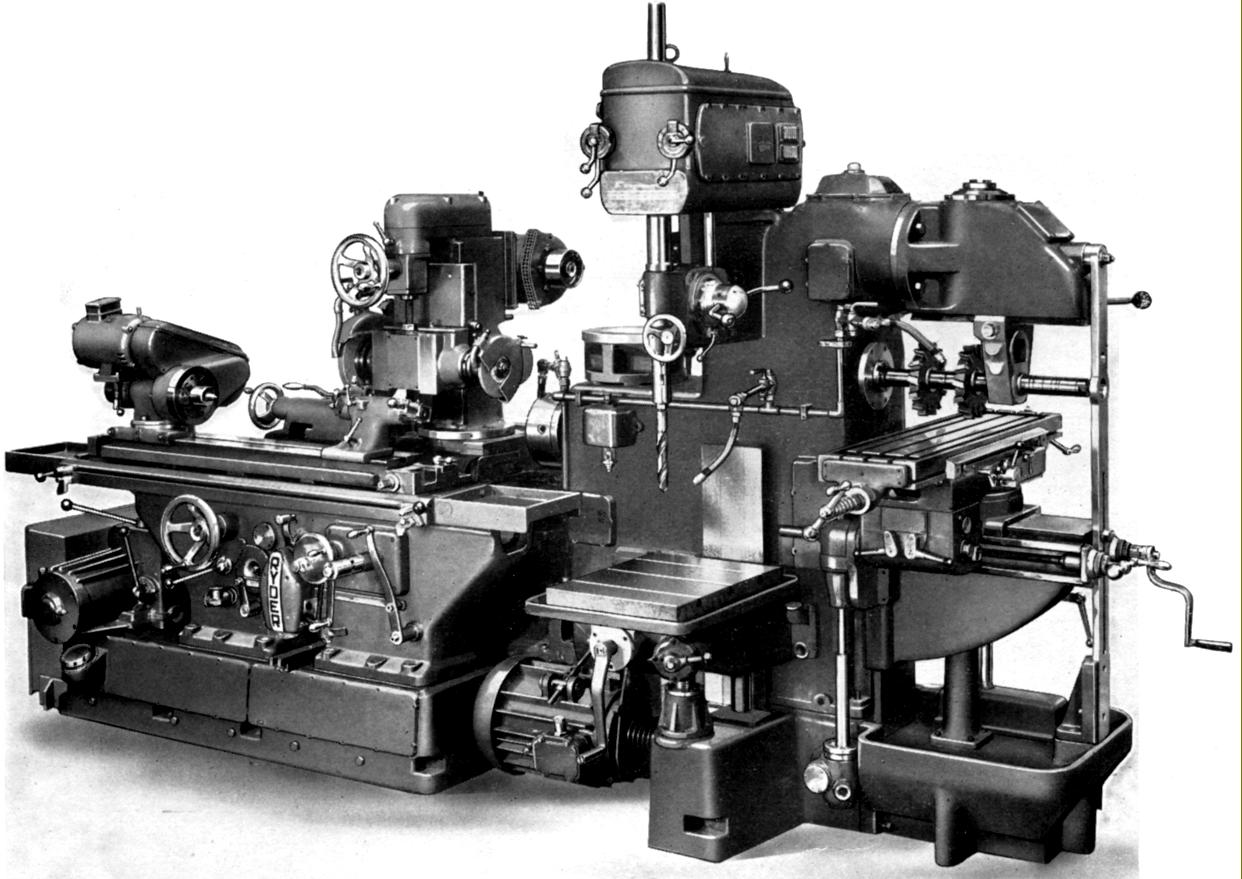
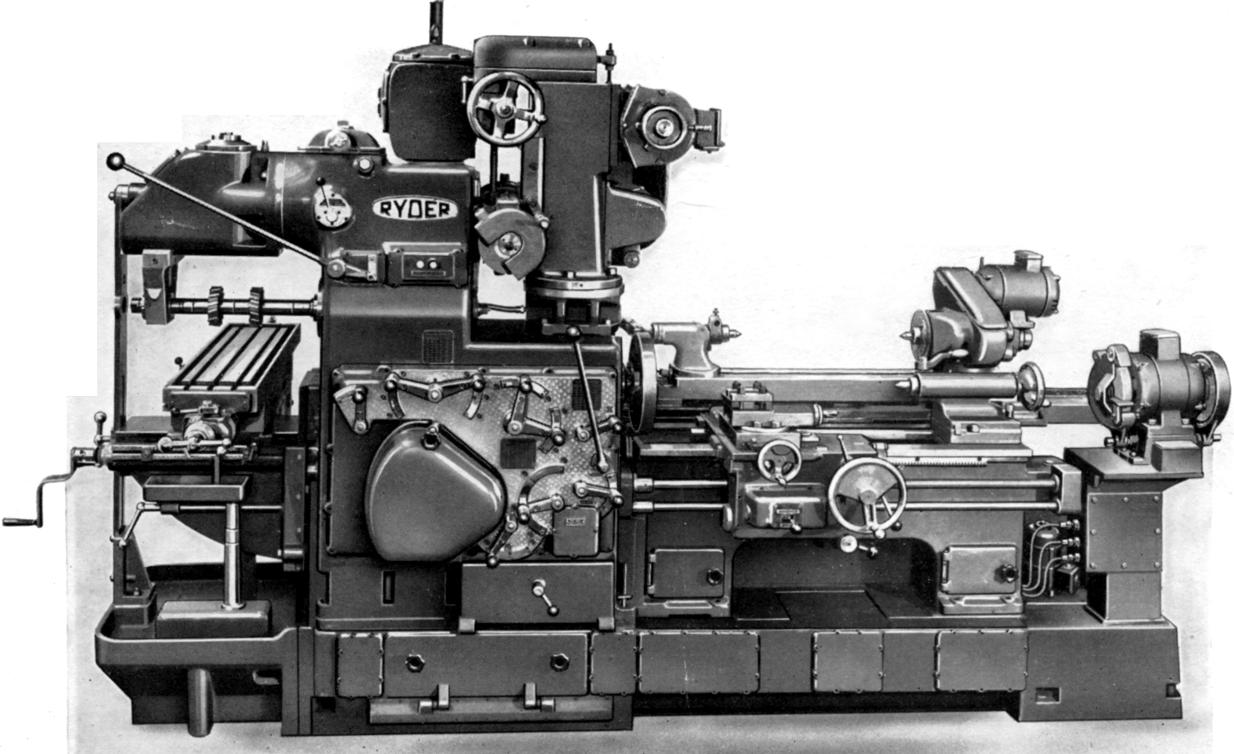
Very much bigger and heavier, this version of the Universal was 11' 6" long, approximately 3' 8" wide over the handles (with the milling table in its centre position) around 78-inches high and weighed in the region of four to five tons. A single 6 h.p. 3-phase motor was used to drive the lathe and milling machine with separate motors for the drill and grinding units. As on the other version, two suds pumps were provided, one for grinder and one for the other three machines. Oil reservoirs were used in abundance - for instance, it appears from an external examination that the feed screws for the milling table each ran in their own oil bath - and the machine appears to have been equipped with a pumped oil supply to certain areas.
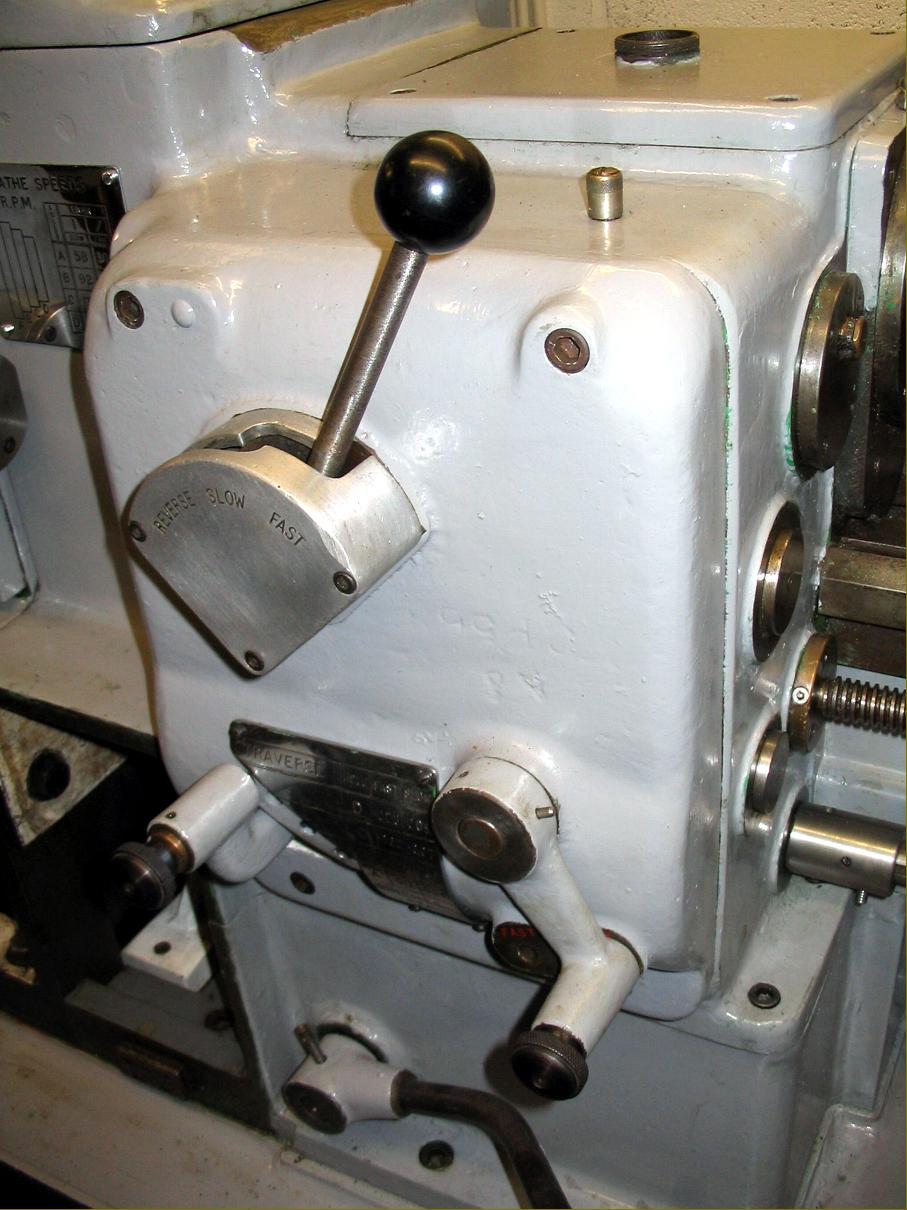
Cast with heavy diagonal braces between its walls, the V and flat-way lathe bed was very substantially constructed and of a useful size. The centre height was around 6 ½ inches with a small removal gap piece allowing an extra 4 inches or so on diameter. The distance between centres was approximately 48 inches and nine spindle speeds of  21, 30, 45, 74, 106, 161, 244, 352, 533 rpm were available controlled by levers on the front face of the headstock.
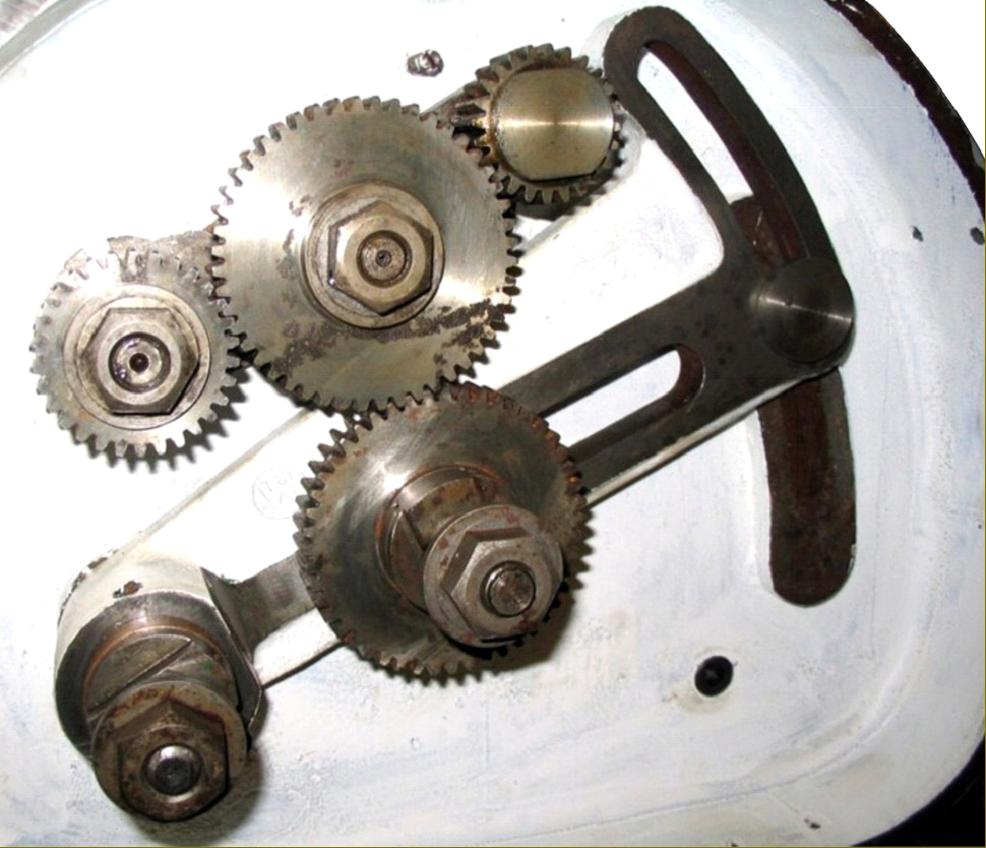
A separate shaft drove the power sliding and surfacing feeds with the drive passing through a safety-overload clutch. Individual engagement levers, with a feed-reverse were provided for both the feeds and the leadscrew and stops for automatic disengagement on the longitudinal drive. A large set of changewheels was provided, including a 63t metric translation wheel  - a useful precaution on a lathe used for emergency repairs where the need for an odd pitch of thread might arise all too easily. Two unusual touches were the provision of a series drain holes in the valley of the rear V in the lathe bed and a cross-slide wiper with an overhanging protector.
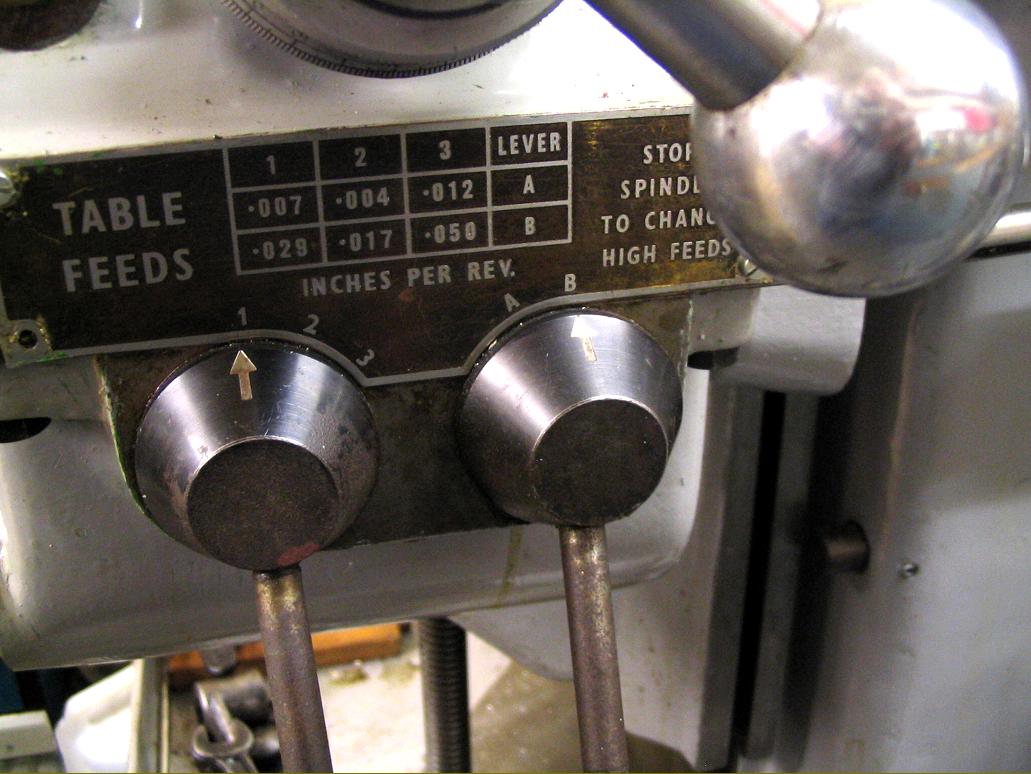
Very heavily built, the milling element of the unit was a "Universal" combined horizontal and vertical including a table that could be swung some 50o either side of centre - both a horizontal and vertical arrangement was possible. The spindle nose was a heavy 40 International taper and the whole design reflected the intention that this was to be used for serious work. A three T-slot, 40" x 10" table was used with power feed on each axis: thirty inches of longitudinal travel, eight in traverse and around fifteen vertically. Spindle speeds ran from 21 r.p.m. though 30, 45, 74, 106, 161, 244, 352 to a maximum of 533. Fittings were provided for a front brace support for the table and knee assembly and, at the right-hand end of the table, a take-off drive to operate a power-driven rotary table - the control for this were, highly unusually, built into the table power-feed arrangement with an attached feed-rate chart.
A complete, self-contained cylindrical/universal grinding machine badged Ryder  was bolted place parallel to the lathe bed. It provided the usual range of facilities including, with accessories, tool and cutter grinding and a limited surface grinding capacity.
Although in post-WW2 years Adcock and Shipley stopped making drilling machines, in earlier decades that had offered a very wide range of heavy-duty types - and it was on this experience that they drew when designing the unit fitted here.  Of very heavy construction the 15" x 20" T-slotted table was able to be elevated (by a telescopic screw) through some eighteen inches; the throat depth was twelve inches and a a No. 3 Morse taper was fitted in the quill. Both power down-feed was fitted - engaged by pulling and pushing on the quick-feed capstan handles - and a worm-and-wheel driven fine feed, although the full-circle handwheel for this did not carry a graduated collar. Spindle speeds were: 80, 120, 225, 345, 360, 530, 760 and 1200 r.p.m. Should you have an Adcock & Shipley or Ryder Universal of the larger or smaller type, the writer would be very  interested to hear from you. 

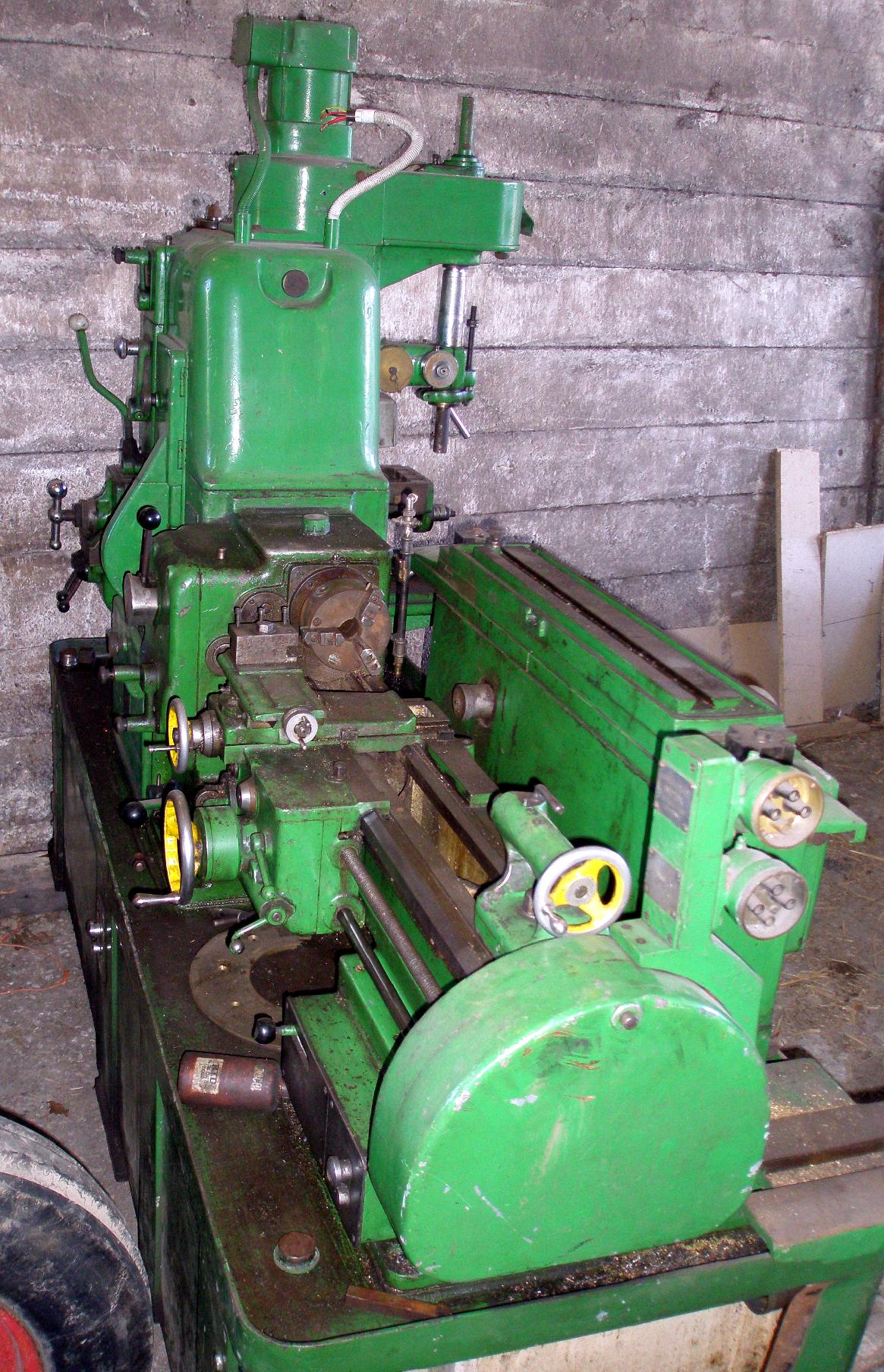
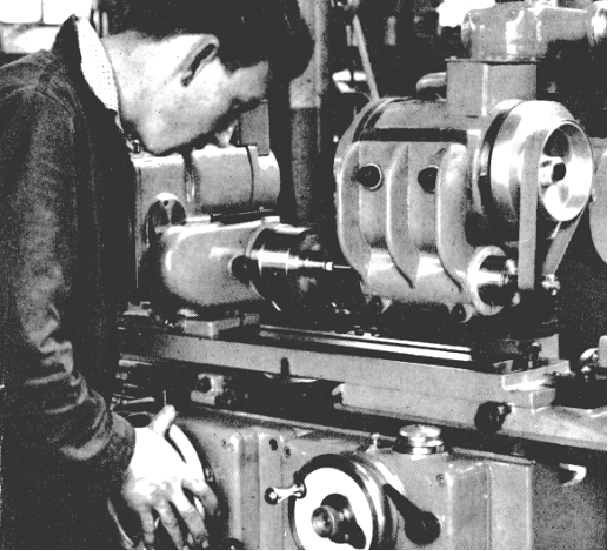
Smaller of the two Adcock & Shipley Universal machine Tools. This side has the horizontal/vertical miller and lathe elements

The cylindrical grinding machine and drill side

Vertical head in position

Horizontal milling

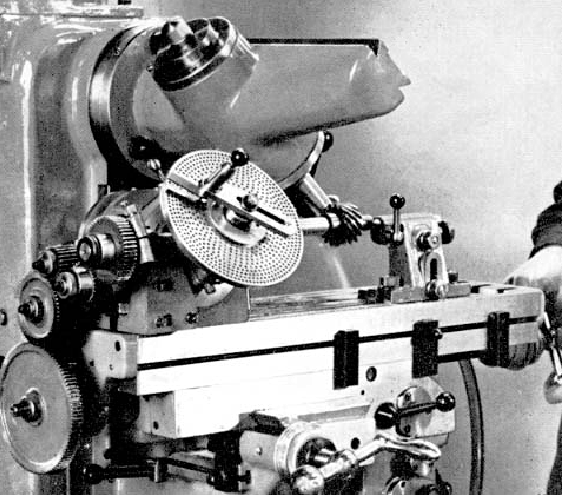
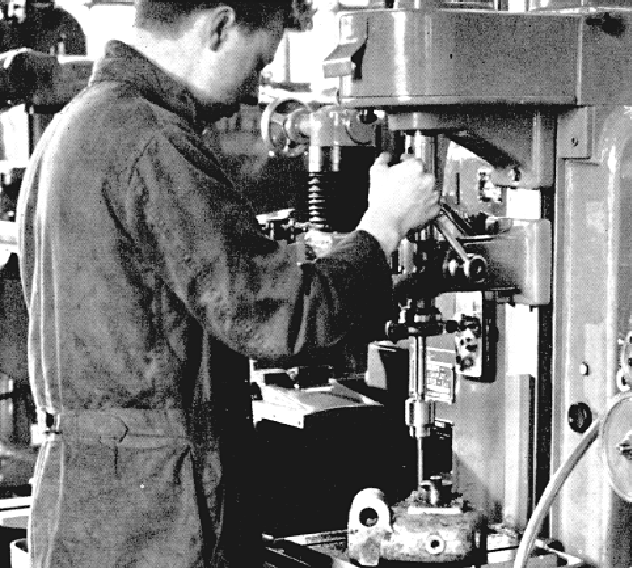
Vertical milling with the head-cum-overarm unit. The geared dividing head, shown playing its part in the production of a helical gear, was on the accessories' list.

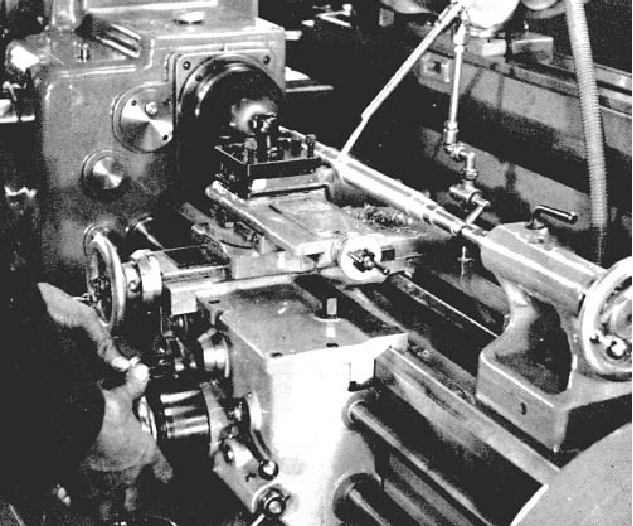
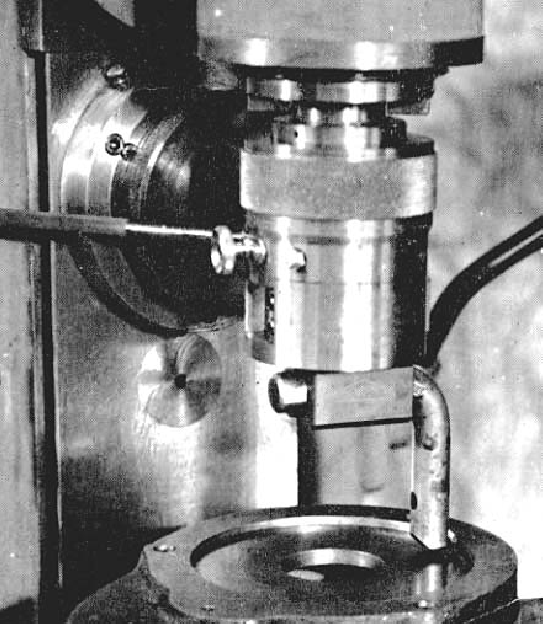
A Boring Head in use with the vertical spindle

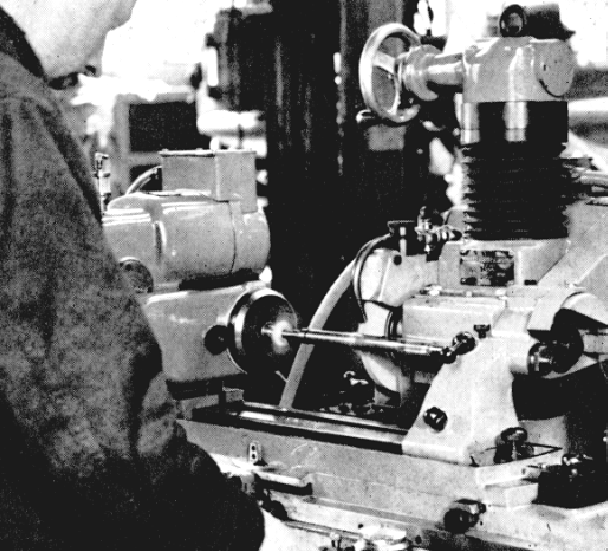
The screwcutting lathe was not large, just an 8" swing by 18" capacity between-centres with 8 speeds of 58, 92, 137, 198, 300, 470, 707 and 1020 rpm. It was driven my a 3 HP 1760 r.p.m. 3-phase motor and had a 0.75" hole through the headstock.

The drill, with a maximum table capacity of 15" in diameter, was mounted at the back of the "headstock" and had six speeds from 420 to 5000 rpm supplied by a 0.5 hp motor. Unfortunately, the quill was fitted with only a No. 1 Morse taper, so severely restricting its capacity for heavy-duty work.

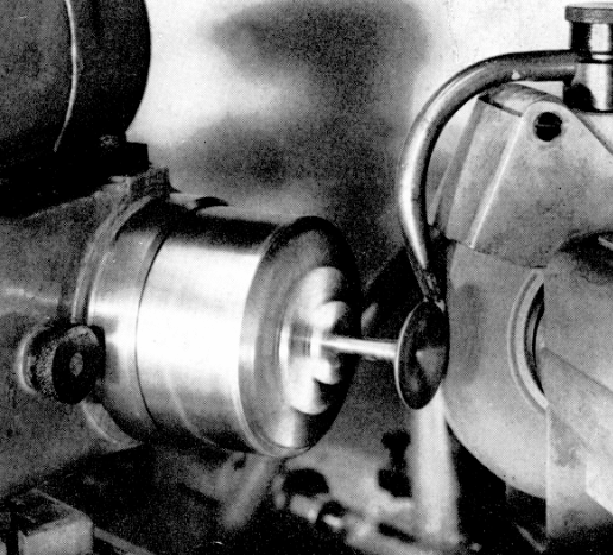
Internal Grinding

Universal Grinding
In a perfect world this would be a valve from the engine of the chief engineer's Type 27 Bugatti being ground by combining the swivelling actions of the wheel head and work head. As the boat left Sydney new bevel gears would have being generated for the crankshaft to camshaft drive - and by Vancouver new gudgeon pins made.….

Cylindrical Grinding:

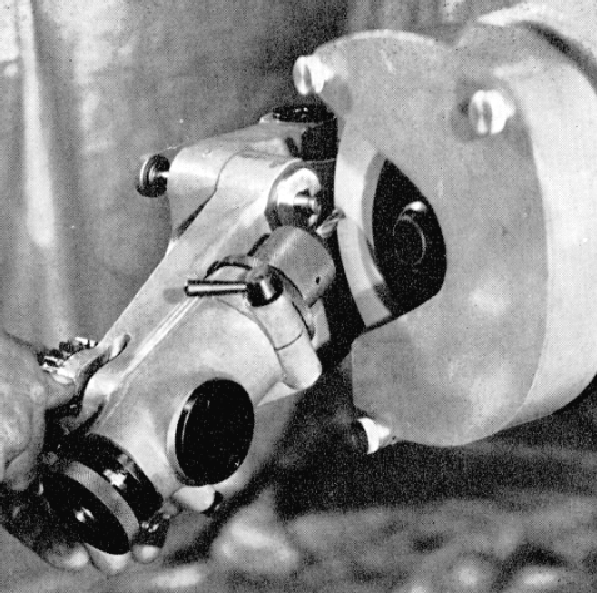
The wheel head of the grinding machine normally was stored at the end of the Universal Machine Tool in such a way that it could be used as an off-hand grinder.

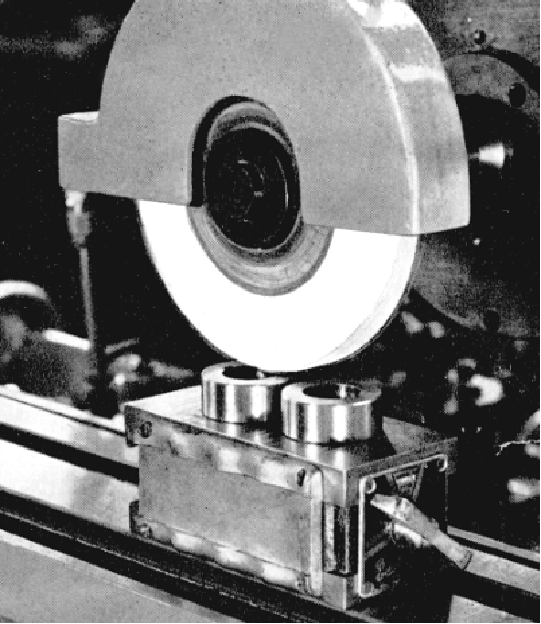
Surface grinding was accomplished by mounting a platform on the standard table and attaching a magnetic chuck to it; an extension was also fitted to the standard wheel head to bring the stone forward and so increase its coverage. 

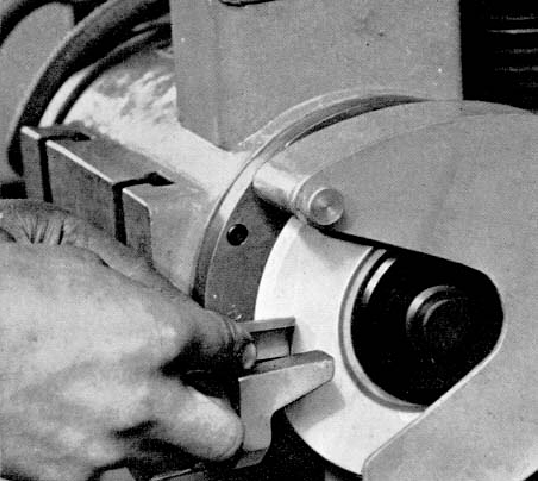
Tool and Cutter Grinding
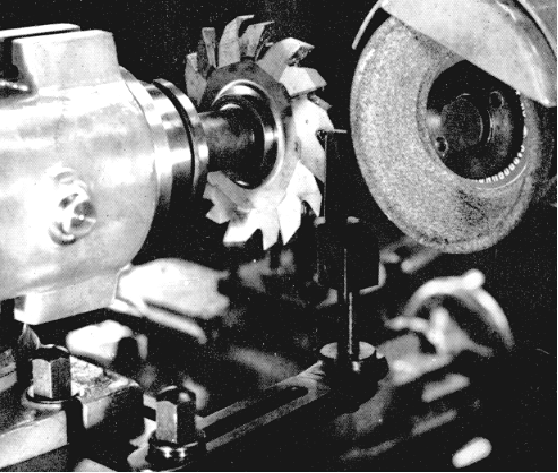
A special universal head was supplied to mount on the table in place of the standard workhead.

The twist-drill grinding attachment being used with the grinding head mounted in its "stored" position on the end of the machine.


E-Mail   Tony@lathes.co.uk 
Home    Machine Tool Archive    Machine Tools For Sale & Wanted
Machine Tool Manuals   Machine Tool Catalogues


Adcock & Shipley
Universal Machine Tool
Adcock & Shipley Horizontal Millers     Vertical Millers