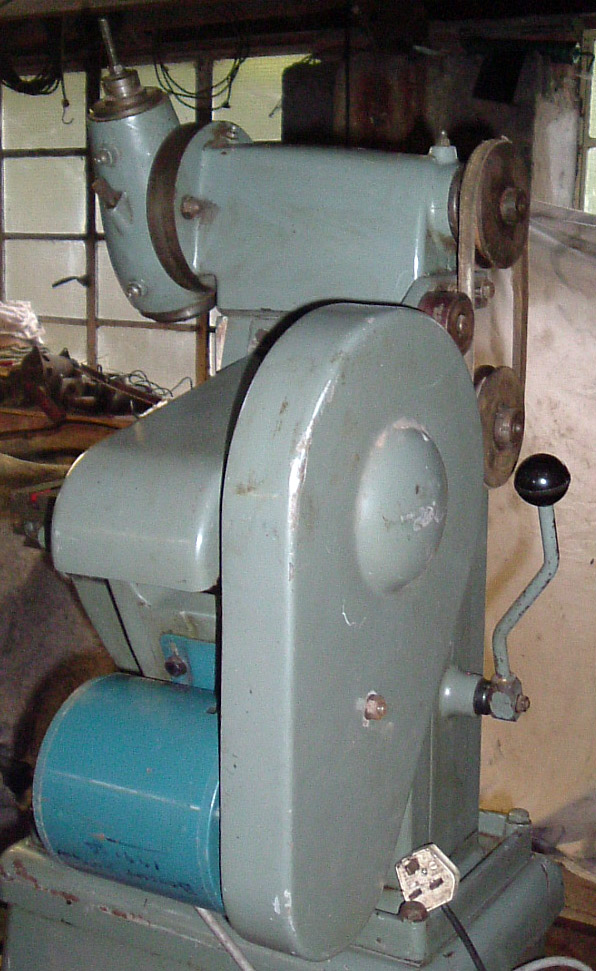
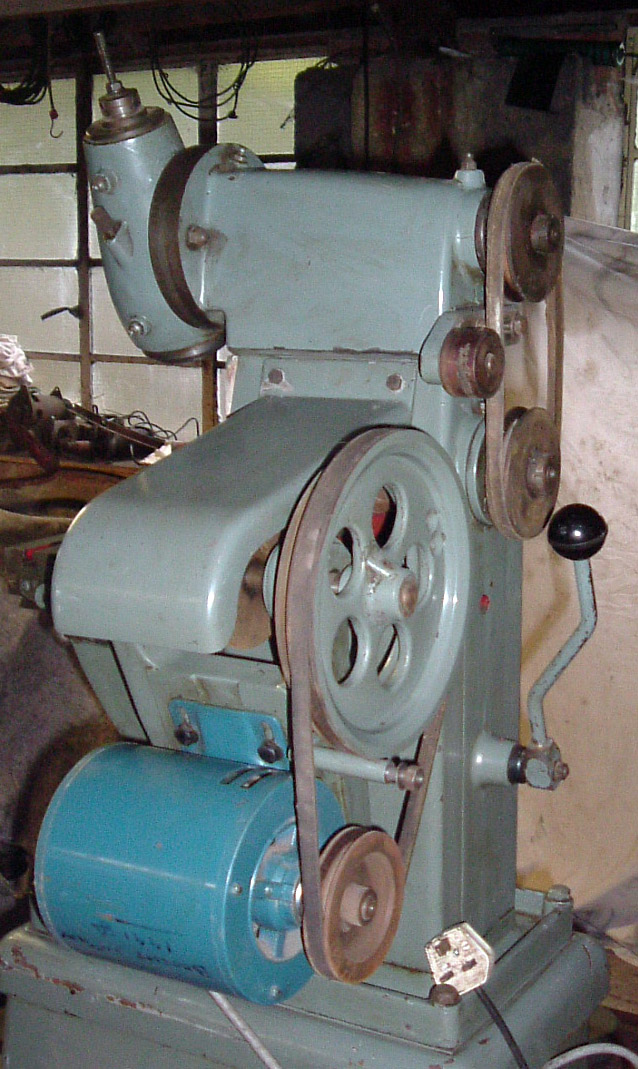
The vertical head appears to have been produced in three versions; the first (Mk. 1) shown at the bottom of the page, carried a bevel box at the back which turned the drive through ninety degrees - from where it was taken by a V belt forwards to the spindle; the next version (Mk. 2) had the drive completely enclosed within the body, but had no quill feed, whilst the final development (Mk. 3) was a beautifully-made head which incorporated both a fine down feed and a quick-action drill quill.
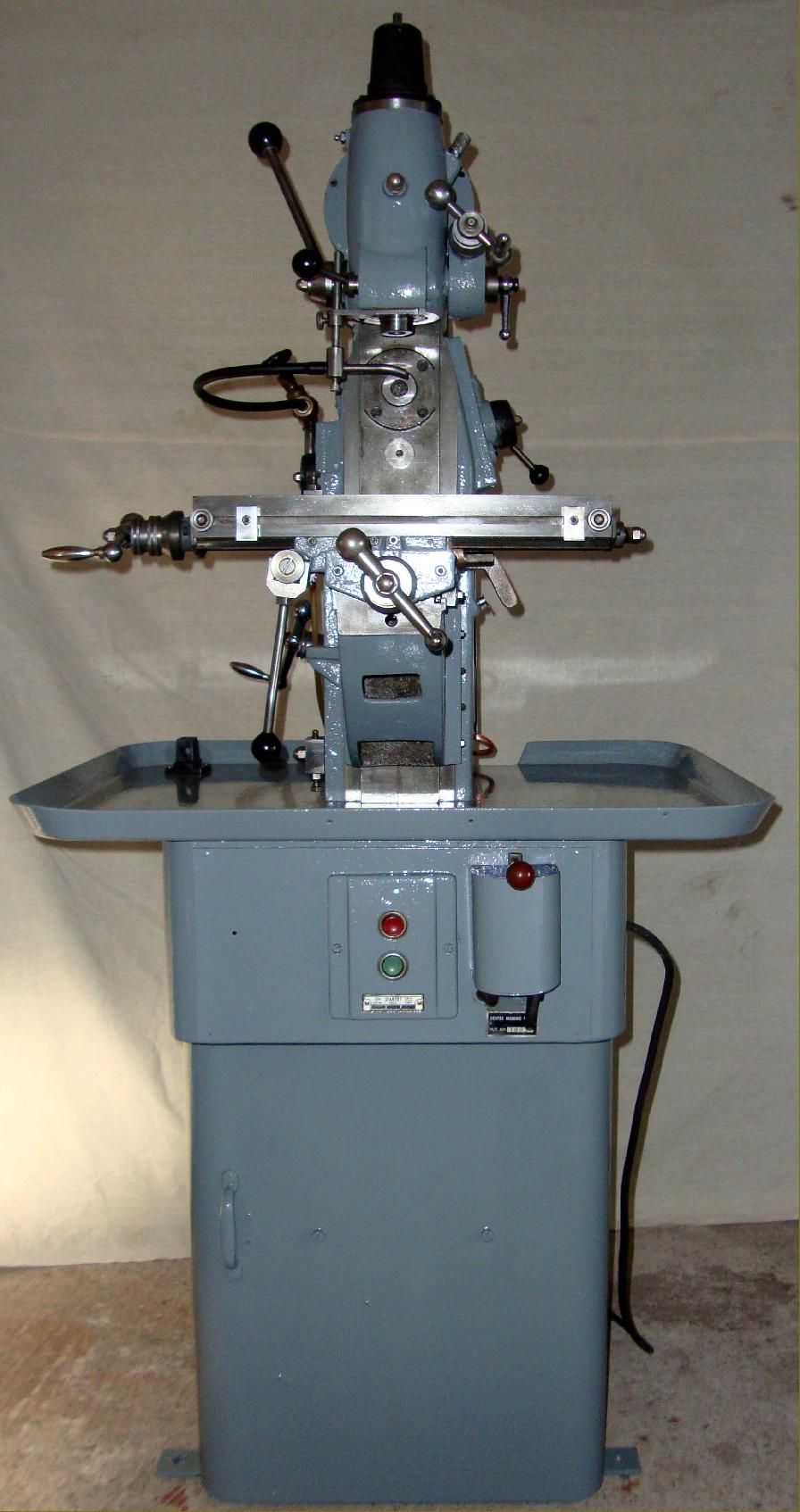
The much sort-after Centec Vertical Head Mk 3 with fine down-feed and drilling quill--the earlier Mk. 2 head (offered in later years as a cheaper alternative) lacked any form of quill feed. The quill had a No. 2 Morse taper (a few later examples a 30 International), a feed of 2 inches and the maximum distance from nose to table was 8" on the 2A with a No. 2 Morse taper; 73/16" on the 2A with a 30 International; 107/8" on the Automil (30 international) and 12" on the 2B and 2C. The whole head weighed about 70 lbs. The drawbar was threaded 3/8" B.S.W. and both the plain vertical head - and early examples of the sliding quill head - were produced with the top of the draw-bar thread exposed. This is very dangerous; wisps of hair are magically attracted to the rotating thread - and can quickly lead to the entanglement the whole scalp. If you are using one of these heads either make a secure cover - or get a short hair cut.
Various shapes and sizes of cover were fitted to guard the belt drive to the head. The one fitted to this machine is a factory standard unit for an early 2B.
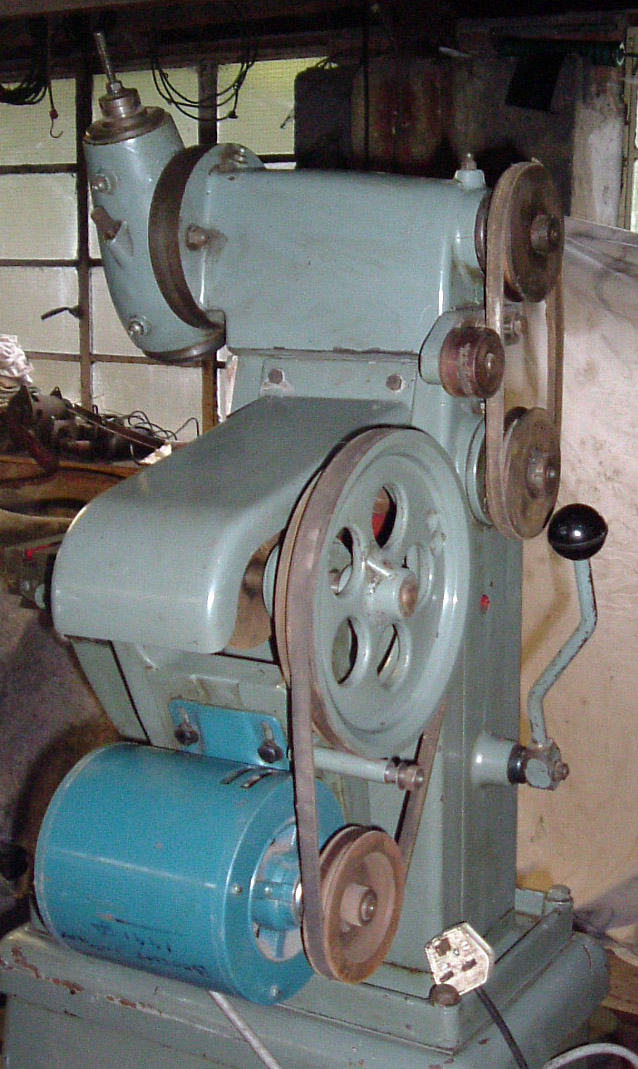
The very rare Mk. 1 vertical head with a bevel box at the back which turned the drive through ninety degrees - from where it was taken by a V belt forwards to the spindle.
Mk. 1 Head. The vertical posts were designed to carry a sheet-steel cover